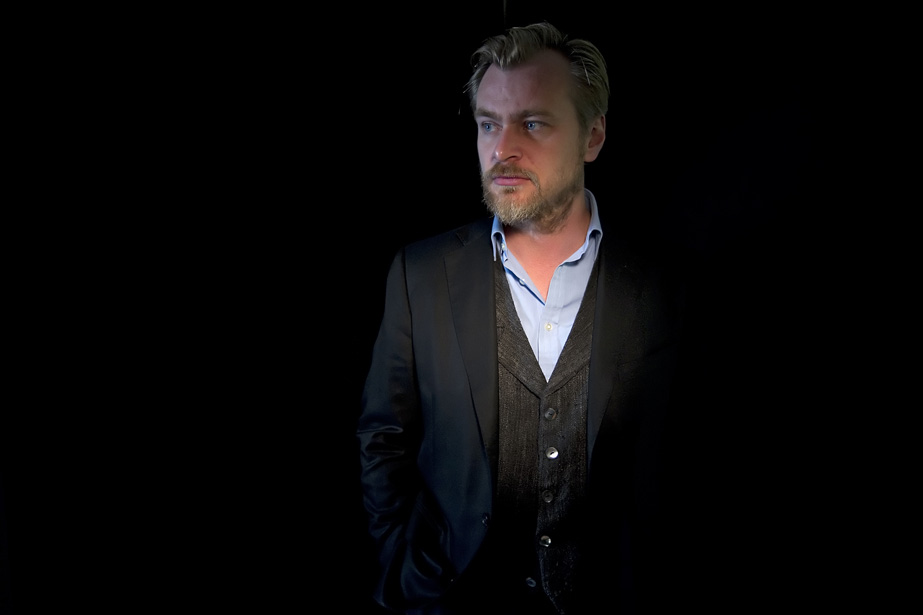
I’m certain that Gary Oldman’s remarks to Contact Music are not the first that have been published suggesting the ending to The Dark Knight Rises isn’t included in most (or any) published scripts for The Dark Knight Rises, and like the mob bosses of yore, he will only speak of it in person to people who must know. Just so we’re on the same page (pun intended), Oldman’s comments…
“The newer people on the film go to his office to read the script. They sent mine out, but it had to be hand delivered directly to me and nobody else. And the final few pages were missing… I went along and talked to Christopher and in person about the ending. Then I locked it away in my head.”
Again, I’m fairly certain Oldman or others have said something to the same effect, and we heard more than enough rumors on even Inception that principle actors were first reading the script in a locked room on the studio lot.
What fascinates me about these rumors, is how they are constantly adding to the Christopher Nolan mystique, fueling an image that is progressively making him the most well-known film director in the world. Nolan has long been compared to one of the other most iconic directors in film history, Stanley Kubrick, and there are ridiculous and logical points to that comparison to be sure. No matter what your thoughts on how Nolan stacks up to Kubrick though, it’s absolutely true that he is being built into a larger and larger icon with every film he makes. And it it is this kind of rumor, one feeding the idea that Nolan has so much clout that he could keep the ending of one of the biggest films of all time locked away in his head, and that he’s curator of a secret so many people want that this is the only way of keeping it under wraps– that is turning him into something larger than himself.
 Nolan isn’t the first to be put into this position… think back to M. Night Shyamalan around the time of Unbreakable and Signs. In the way Nolan is now often held up to Kubrick, Shyamalan was as frequently compared to Hitchcock and Spielberg. This happens in sports, commerce, technology, art… we love the idea that we’re watching a new Titan forming, even as that kind of excited build up often results in a premature collapse of the figure being spotlighted (see: Shyamalan!). The difference between Nolan and Shyamalan though, is that Nolan’s beginnings and ascent to his current level of power and clout were much more modest and slow-burning. Memento was a big deal, but not at the phenomenon scale like The Sixth Sense.
That single difference is enough to end the comparison between the two but the reason Nolan is becoming, and will likely remain, a bigger figure than Shyamalan ever was is because his injection into the public consciousness was through an already established iconic character. Batman made Nolan a billion dollar filmmaker, while original works like Memento, The Prestige (an adaptation, but heavily reinterpreted) , and of course Inception have ensured he’s respected as something bigger than that. In fact, without getting hung up on Batman for too long, I think it’s safe to say that for better or worse, earned or a result of smoke and mirrors, Nolan has separated Batman from the idea of a “superhero” movie and made it something very different in the eyes of most audiences and critics. Somehow Nolan has made it possible to make a movie about a crime-fighter in a ridiculous rubber suit and be as respected for it as a prestige director making the latest heady race drama.
 The real key to Nolan’s evolution into an iconoclast of cinema, is that he has built an oeuvre thickly wrapped up in the mystery of dreams, memory, magic, secret identities, and even storytelling itself. Unlike Shyamalan, whose (unfulfillable) promise was being an excellent storyteller that would always be able to getcha! at the end, Nolan has made mystery his core aesthetic but without any constraints or pressure of twist endings. Consider that while Memento may have a “twist ending,” it’s overshadowed entirely by the unique structure of the film. The Prestige certainly has a twist ending, but (and this is drawing a line in the sand that not everyone will get behind) it is a twist so built into the structure and meta-narrative of the film itself that it owns it in a very unique way, and is further overshadowed by the magic and storytelling (and David Bowie). But even if we consider The Prestige a twist-film, it’s obvious that The Dark Knight and Inception were not phenomenons because of their endings. And Inception, like Memento or The Matrix before it, is a film that is intriguing because it adds new layers of structure to the world we can already see around us, which pokes as at that reptilian part of our brains that is always hoping for another layer or a higher order to our visible world. It shouldn’t be too shocking to consider that Nolan is making films that manage to excite us in the very same subliminal, core manner that religion excites people, and he’s wrapping it all up in entertaining superhero and heist stories. Other throwaway periphery elements, like Zimmer’s increasing ability to score Nolan flicks in such a way that they sound like the most important stories ever told, are only icing on the public consciousness cake.*
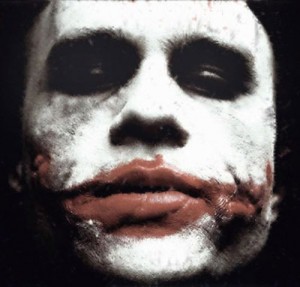 So it would seem Nolan’s instincts are to make films that toy with the nature of storytelling itself and to weave that self-reflection into stories about dreams and memories and magic. Even when he’s serving a more commercial master though, he’s turning an iconic villain into a supernatural force that, by design, is able to accomplish impossible, illogical things to create grand spectacles. Does it not feel like the Joker is using Gotham, and the people and places he chooses to blow up, to tell some insane city-scale story? Batman may be an earnest hero in the Nolan universe, but his key villain is explicitly writing a mythos for the two and takes glee in explaining to the Dark Knight (and us) that he’s establishing a bedrock for a lifetime of struggling between chaos and order, as represented by himself and another wacko in a Halloween outfit.
This brings us back around to the real world part of Nolan’s image: the quiet, brooding genius who weaves amazing stories for the cinéastes, and legitimizes comic book characters for the geeks. By virtue of making one of the most anticipated sequels of all time, he holds the keys to secrets that millions of people want to know. Consider that this real-world fact sits directly adjacent to the subject matter of his last film, which is about the high-concept dream-based theft of individual ideas locked in people’s mind. Further compounding this is our ever changing media landscape that has turned simple anticipation for a film into a perpetual landslide of tweets, Facebook posts, blogs, etc. Nolan is now the center of rumor after rumor about his genius and his methods, including actors like Joseph Gordon-Levitt assuring us that we should “trust in Nolan just because ” (I’m paraphrasing), and Oldman telling us that the ending to the film simply does not exist outside of his mind until such time as he decides to make it corporeal. You’ll also hear people speak of his refusal to use a cell-phone, and that he communicates only through assistants that insulate him from distractions. And while he’s not a total publicity-refusing recluse like The Wachowskis, his interviews are usually pretty nebulous, and he can play coy with the best of them. All of this to say: he’s just accessible enough not to turn off those adverse to pretension, without losing his mysterious aura.
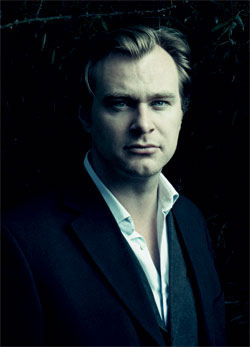 Just by the sheer numbers game, one expects Nolan’s name will eventually be attached to a piece of shit (Man of Steel?), but it’s quite possible he’s already gotten big enough to weather that kind of thing without losing his status in the cultural consciousness. But unlike Spielberg –who made a string of classics filled with unassailable filmmaking– or Kubrick –who made films that were so literary and logically structured that they hold up to insane scrutiny– it’s disingenuous to say Nolan has yet reached a mastery of filmmaking craft, certainly not to the degree that puts him on the level of those two. His “brand” and reputation have quickly become as powerful, but the classic, unimpeachable set of films have not yet manifested. Just recently a shit-storm erupted on the internet when Jim Emerson published an extensive video breakdown of how sloppy (from his perspective) Nolan’s filmmaking can often be, and filmmaker and music video director Joseph Kahn responded with an equally passionate rebuttal. I’m not going to comment on either side of the argument here, but it’s safe to say that only the work of a highly visible and idolized filmmaker typically begets such scrutiny and defense.
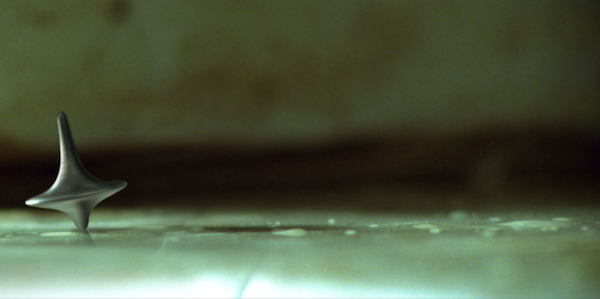
We’re still many months away from a key moment in Nolan’s career, at which point the populist franchise he’s overseen will culminate with a bang or a bust. “In Nolan We Trust” is the meme– a popular sentiment from people that are crossing their fingers for a spectacular conclusion to an imperfect, but truly unforgettable blockbuster franchise. I think it may very well make or break the Nolan myth, and either set him up as the “well, The Dark Knight was amazing, but man they fucked up the ending” guy or as “Christopher Nolan, enough said.” The parallel here is obvious… will the top continue spinning as he blows it and the whole dream of Nolan The Filmmaker collapses around us? Or will it spin itself out as the franchise sticks the landing, letting us know that Nolan truly is the real thing…
Respond on twitter here.
Discuss on the boards here.
Comment below.
*Apologies for not fitting Insomnia into the picture, but I’ve somehow still not managed to see it!
For more excellent discussion of Christopher Nolan’s filmography, look no further than this episode of the Director’s Club podcast, co-hosted by CHUD contributor Patrick Ripoll.
(Oldman quote via i09)