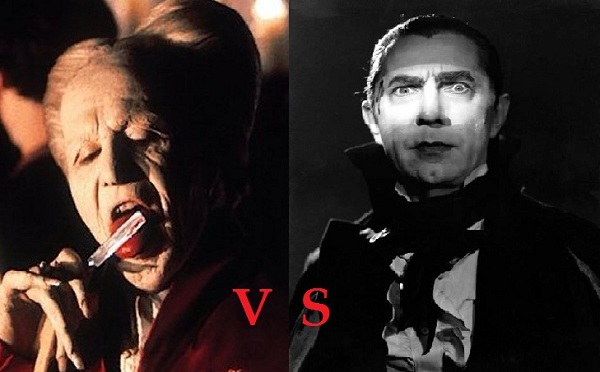
REMAKE VS. REBOOT SPECIAL EDITION: DRACULA
Caveat: Look, I know I promised I’d be doing The Thing next, but I need to re-watch 2011’s Thing and I’m waiting for the DVD to come from Netflix. I’ve had Dracula on the brain these days, so rather than hold off on a new installment of Remake vs. Reboot, I’ve decided to do this “special edition” on the story that may actually hold the crown title for remakes, reboots and re-imaginings, Dracula.
The story: In Victorian times, a Transylvanian nobleman with strange predilections ingratiates himself to a small circle of English socialites, whom he uses to satisfy his unholy desires. When one of the women dies, a doctor with knowledge of the occult is brought in, and he reveals to the others that they are dealing not only with a vampire, but with the Lord of vampires himself: Count Dracula.
Ah, Dracula. Where to begin? The purpose of this article will not delve into the normal Remake vs. Reboot territory, as there have been so many “remakes” of Dracula that the term loses all meaning. Besides, all of them are in one way or another adaptions of Bram Stoker’s seminal Gothic novel Dracula, and adaptations are a clasification unto themselves. Instead, my aim in this article is to focus the lens on the cinematic iterations of Dracula by highlighting the most “important” ones; and by that I mean the ones that have gained some cultural resonance. What does a person in 2012 think of when they think of Dracula? Is it the classic widows-peaked, opera-caped Bela Lugosi? Is it red-eyed, fang bearing Christopher Lee? Is it bizarrely coifed and ornately adorned Gary Oldman? Is it disco-do Frank Langella? (Probably not) Or has Dracula transcended all of these silver screen incarnations to become something more intangible, something that hovers just beneath the surface of our collective consciousness, a shared nightmare of a tall dark stranger that comes to us in the night, floating at our window, yearning to come in and drain us of our rich, red essence?
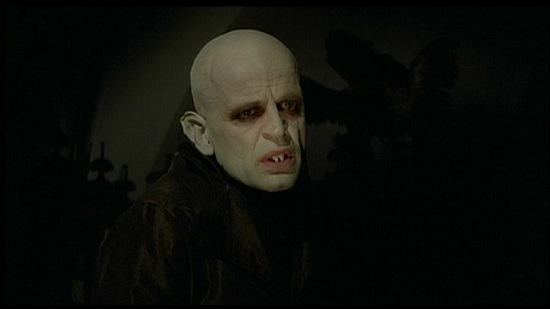
Ok, got a little dramatic there. And sexy. But seriously, let’s talk Dracula. For the sake of manageability, I’m going to have to narrow things down radically. First off, I am going to exclude both Murnau and Herzog’s Nosferatu. I love both of these films and could, and probably will, write a separate article about them. They most certainly belong in this conversation, but I feel like they inhabit their own unique and exquisitely creepy branch of the Dracula cinematic story. This article needs to have some focus though, so for now I’m setting them aside. Sorry Klaus.
Secondly, I’m going to stick to what I see as being the major film versions of the Bram Stoker story. I tell you this right now: the absolute best, pound for pound version of Bram Stoker’s Dracula in my opinion is the BBC mini-series from 1977 starring Louis Jourdan. Yes, it has 70’s British Doctor Who production values with its video presentation and low budget sets, but it is excellent nonetheless and scared the living crap out of me when I saw it on TV as a lad. It is available on DVD as Count Dracula, and if you are a Dracula fan and don’t have this in your collection I demand you rectify that. There is also a charming 70’s low budget version from Dan Curtis starring Jack Palance that a lot of people love, and Palance is said to be the model for Gene Colan’s Dracula in Marvel Comics’ sublime Tomb of Dracula run. There is also Jess Franco and Christopher Lee’s Il Conde Dracula, or Count Dracula, a cheapie Italian attempt at getting Stoker’s novel “right” that serves as Lee’s penance for years of playing the Count for Hammer. All of these versions are legitimate and some would even argue better versions of the story. But these versions are too obscure to have made a major dent in the public psyche. Not to take anything away from them, but let’s be honest, if you ask Joe Sixpack who the definitive Dracula is, there’s no way in hell he’s going to name Jack Palance or Louis Jourdan.
In my mind, there are four major cinematic versions of the Dracula tale. They are: Tod Browning’s 1931 Dracula, Hammer studio and Terance Fisher’s Dracula aka Horror of Dracula, John Badham’s 1979 Dracula, and Francis Ford Coppola’s Bram Stoker’s Dracula. These four films were, in their times, big productions aiming to bring definitive takes on the Dracula story to film-goers. And I would argue that each of them succeeded in their own way. Each of them possess strengths and weaknesses of their own, and while it can be argued that none of them alone is a “definitive” take on Bram Stoker’s enduring legend, taken together I believe they complete a picture of what Dracula is in the public consciousness.
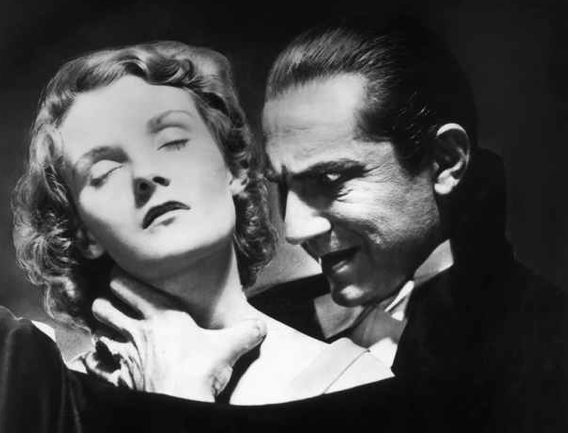
Let me be frank, Tod Browning’s 1931 Dracula is at best a mediocre film, even for its day. Based on the John Balderston stage play that had brought the Count to American shores, Browning’s film is a flat, stilted affair that is significant for two reasons; its position of being the first real Hollywood “horror” film, and the iconic performance of Bela Lugosi as Dracula. In Lugosi we have the most pervasive physical representation of Dracula that we are ever likely to see. The fact that he bears no resemblance to the way the Count is described in the novel is of no consequence. Lugosi is Dracula. It is the very definition of an iconic performance; the voice, the costume, the stare – these things combined to create an image that permanently etched itself on the collective conscious. Children born eight decades beyond the film’s release know this image. Yes, they know it from cartoons and breakfast cereals and counting Muppets, but all of those things rest upon the shoulders of Lugosi’s unforgettable characterization. So for all its failures as a cinematic work, Tod Browning’s Dracula gave us one vital piece of the puzzle with Lugosi — it gave us the image.
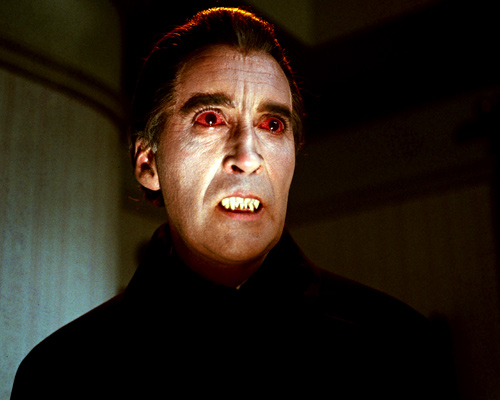
When Hammer’s 1958 Dracula distinguished itself from the Universal film on American shores by re-titling itself Horror of Dracula, it provided viewers with an insight to its purpose that may or may not have been intended. Horror of Dracula does exactly that – it puts the horror in the Dracula story. Where Lugosi was suave and exotic, Christopher Lee is downright terrifying. Lee is a towering, hissing presence, and the first color representation of the Dracula tale squandered no opportunity to show you the red of the blood or Lee’s horrifying, bloodshot eyes. This is the horror fan’s Dracula, and though Hammer takes inexplicable and unnecessary liberties with the Stoker story, the production is lush and vivid, and Lee is so utterly preternatural and terrifying that this version’s impact cannot be denied. This Dracula probably scared the shit out of more people than all the other Draculas combined. More than any other, this take reminded the public of what Dracula was intended to be. It reminded us of the nightmare, of the fangs and the blood. It reminded us of the horror.
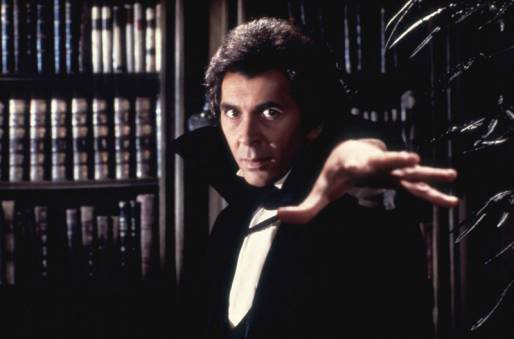
Of the four, John Badham’s 1979 Dracula runs the risk of being the most forgotten, yet its influence is clearly felt. More a remake of the 1931 film and subsequently the Balderston play, Dracula 1979 has the unfortunate distinction of being the Dracula for the disco era, an “honor” it shares with the kind of awesome Dracula spoof Love at First Bite. The era manifests itself in a most unfortunate way; it manifests itself in Frank Langella’s feathered, clearly blow-dried hair. It’s a dated, unfortunate look and it’s a real shame, because Langella is excellent as Drac. The production itself is excellent as well, but the adherence to Balderston’s play rather than the Stoker story makes the film seem landlocked and unnecessarily small in scope. But when Langella is onscreen he commands, with his weird, twitchy pupils and his deep, cultured voice. Langella really cements the character as a romantic figure, and while Coppola’s take over a decade later would attempt to sell the romance of the story, I would argue that Badham’s Dracula is the film that more successfully sells the character of Dracula himself as a romantic figure. It is the romantic image of the vampire that has become such a cornerstone of the subgenre, through Anne Rice to Buffy to Twilight. Love it or hate it, the romantic vampire is here to stay, and I think in terms of Dracula, John Badham’s 1979 film is the film we have to thank.
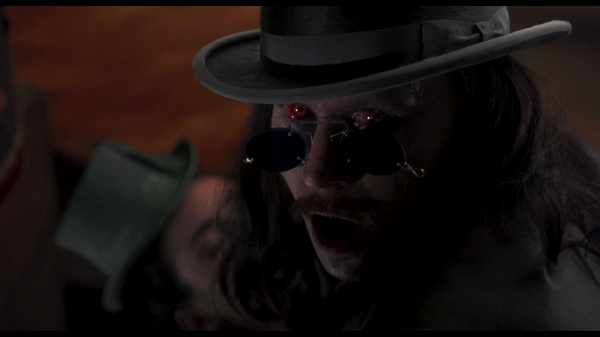
This brings us to 1992 and the last major attempt to bring Dracula to the silver screen, Francis Ford Coppola’s Bram Stoker’s Dracula. I’m going to show my hand here: I love this film. I have seen it countless times, and it is one of the only films I know of that seems to improve with age. Sure, it has flaws. Keanu is bad (though I would argue that the character of Jonathan Harker has always been a drip and therefore Keanu’s endearingly bad performance is apropos.) Winona overdoes it, and the whole romance angle between Dracula and Mina is overdone. But I find so much to love in this film. I’ve heard its inventive visual style described as “pretentious”, a criticism I find disappointing especially in this unimaginative age of CG excess. The visual effects of Coppola’s film (done by his son Roman) are ingenious and purposeful and in my mind in no way just arty pretension. And of all the major Dracula films, this is the one that does Stoker’s story the most justice. Could there be a modern actor more perfect for Dracula that the chameleonic and brilliant Gary Oldman? He effectively portrays Drac at many different stages, and as bizarre as his old, beehive hairdo Drac is in appearance, it is the only image of Dracula since Lugosi to cement itself as an indelible Dracula image. Hell, The Simpsons even parodied it. This is the only Dracula to get both the romance and the horror; the scenes with the vampire brides and Dracula in his bat and wolf forms are effective and scary. It really does do its best to do Stoker’s novel justice, and though it has flaws, I think it’s as good as we could hope for in a big budget spectacle film. It is the film most people probably turn to when they think of the story of Dracula, and it is the version that likely sits most immediately in most people’s cinematic memory. By rediscovering Stoker’s novel, Coppola’s Dracula gave us back the story.
Oh, and then there’s this guy:
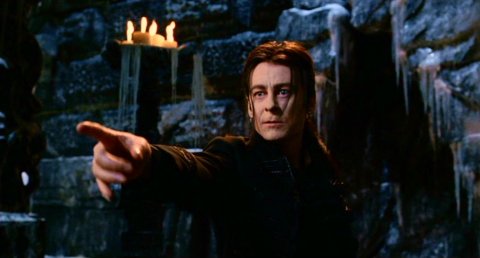
Anyway, there we have, in my opinion, the four cinematic interpretations that paint the fullest picture of Dracula in the mind of the public: the image, the horror, the romance and the story. Can one film encompass all four elements perfectly? Perhaps. I know I speak for everyone when I say that Dario Argento’s upcoming Dracula 3D will likely be the definite take, seeing as that it adds much needed elements like giant praying mantises and Dracula claws capable of decapitation. But until that masterwork arrives for we have these four films, plus countless (ahem) sequels, miniseries, TV shows, and not the least of all, Stoker’s novel itself. When one thirsts for Dracula, there is a rich vein of entertainment to draw from, and I’m sure it is a vein that will never run dry.
Up next: The Thing, I promise!