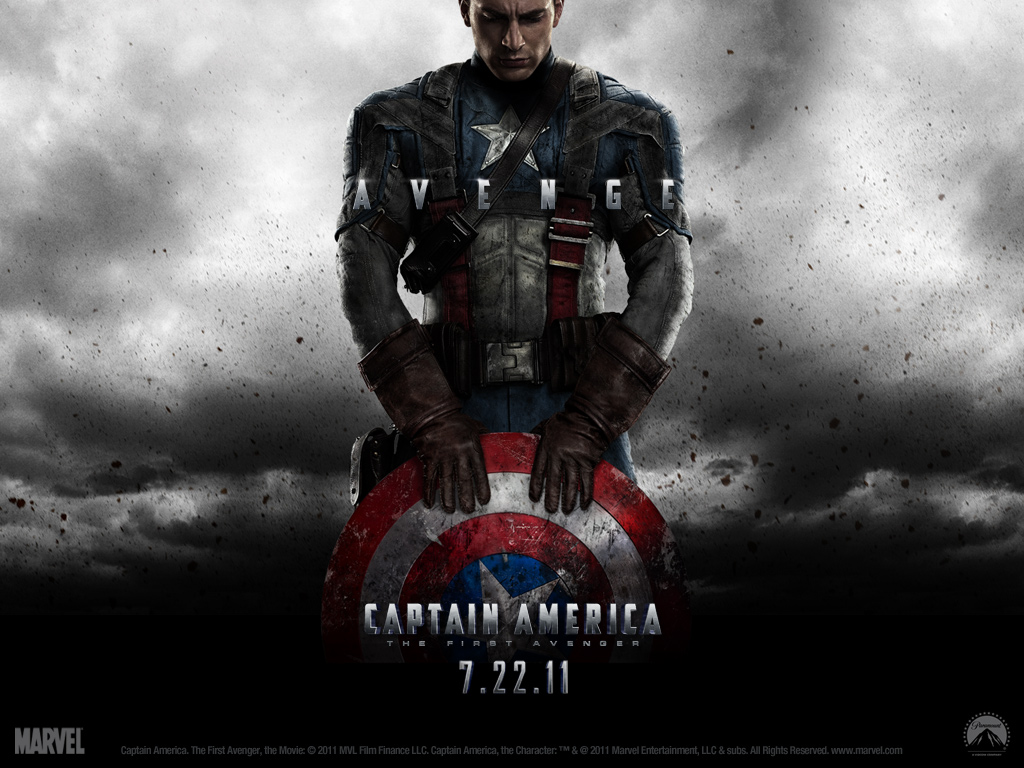
There’s no shortage of cynicism out there from those that take it for granted that Captain America simply will not function as an international property. Marvel itself long assumed that the star-spangled superhero would only have a chance in other countries by sliding in under the more innocuous title The First Avenger, but the NY Times has drudged up a little inside baseball that describes a surprising demand from the international arm of Marvel to stick with the more direct title, crediting the enduring cache the classic comic character retains even in these divided and complicated days.
This doesn’t necessarily extend to all non-US countries big and small though, as Cap will bow as only The First Avenger in South Korea, Russia, and Ukraine. In those countries it is felt that tensions are just too elevated at present, the politics too burdened by complication to risk putting off the growing audiences found within them. In Europe and every other foreign market though, 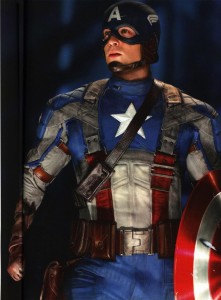 Captain America will hit theaters hoping to rake in that foreign cash that has bolstered virtually every major blockbuster this year. It’s these revenue streams that put Pirates 4 past a billion dollar gross and pushed Thor, an otherwise solidly unremarkable Marvel debut, within spitting distance of half a billion.
So how will Cap fare? He’ll probably do just fine, and there’s even a chance he’ll do very well.
It would be silly to suggest that America’s worldwide image is particularly pristine these days, but you can’t ignore two things: the universal language of high-production-value spectacle, and the world’s enduring disdain for Nazis. But beyond those shallow factors, there are a number of elements to the Steve Rogers’ story that can make it appealing for even a foreigner jaded by contemporary American policy and who might be skeptical of more our naive and outwardly jingoistic iconography.
Consider that Rogers begins as an underdog decidedly unappreciated by the great American war machine. He’s a shrunken waif who is bullied, denied, and dismissed by those in power, told to “get lost.” Even though the film is nostalgically portraying an era when America’s might was serving righteous goals by virtually any standard, there is still an audience surrogate that is misunderstood and ignored by that power, and who can be understood by someone with no investment in American patriotism, or who is even decidedly hostile towards it. What’s most important is that at its core, this story doesn’t just represent some bygone day when America was blowing up the right people and places, as that only brings regretable subtext that maybe we’ll one day blow up the right people once again. No, what’s more powerful is the story of a man who’s not allowed to contribute to or effect the larger effort for change going on in the world, and how he himself eventually comes to lead and affect that effort due to his innate bravery and courage.
When “Captain America” is created, Rogers’ inner strength is revealed and fantastically matched by his new outward strength, and the American military power begins to rally behind him and follow his moral lead. Granted: it’s undeniable that there is the subtext of blind loyalty and deferring to American authority in Cap’s story, but on the surface there’s the more vivid depiction of a courageous outsider finding the strength to be noticed and respected by the establishment. That’s something anyone can relate to, and if Johnson has properly captured the story of a hero that embodies the ideals of America as they should be, then foreign audiences will likely look past or even accept the US-specific WWII nostalgia as part of that more universal story.
 It would be ludicrous to suggest that the world see the US as the role model it once did, but it’s safe to say that between having to so visibly face economic realities and finally moving on from unapologetically cowboy-like leadership has changed the game a bit. Certainly not everyone across the world will care to see an American avenger take on the Nazis, but the US geopolitical stage has been reset enough that foreign audiences will at least give Marvel the chance to tell the story. Even if your average Frenchman or South African teenager isn’t going to leave the theater rooting “USA! USA!,” things have changed enough that they’ll be open to watching an hour and half of high-dollar action without rolling their eyes up out of their skulls. And hell, if there’s the kind of subtly progressive and amenable commentary on the American military culture that was present in the first Iron Man (which the world obviously loved), then Captain America may find new life as a truly international icon- red, white, blue or otherwise.
So across the world the unlikely chance is here to tell a good story that centers around a walking American flag. Now all that’s left is to see if the movie is worth a shit in the first place.
—
The world’s still a complicated place, so if you think I’m off the mark and that Cap is in for a rough time, let me know why. Tweet your geopolitical classic superhero theories at me 140 characters at a time, or drop as big of a load as you’d like in the comments. I’m especially eager to see what kind of debate will get kicked up on the message board (or in the Pre-Release thread). But regardless of the outlet, let me hear from you!



7 comments
I’m sure it’ll go down a storm in Iraq, Iran & Afghanistan.
Yeah, but they won’t see it in Iraq, Iran and Afghanistan. They just got their first copies of Dirty Rotten Scoundrels so give Cap a decade or two to get over there. On a side prediction, if Paramount can get Captain America into China as the 21st foreign release that year (China only allows 20 foreign films to be shown in the mainland during the year), there will be a nice chuck of change. For some reason, the Chinese (and a lot of others) love all things American as long as it is not an American telling them how to live their lives.
Good write-up! Normally I don’t care how movies do, and I guess seeing as how this is part of an already predestined franchise, it really doesn’t matter, but I’m still pretty interested in how this will do. As many nay-sayers as there are out there touting that Super Hero movies are trending down or people are tired of 3d, I think this will be a pretty important film in that it might determine how those arguments go forward.
it won`t do that well, not because of America theme, but mainly because it not so good film. sorry.
I don’t think the vast majority really care.
All depends whether it’s a good movie. Which it looks like it will be
( sorry Nefilim the rest of us might have to actually watch the movie before taking your opinion )
I think it’s got more to worry about with HArry Potter, than it’s title.
Well, here in Spain they are playing down the “America” angle. In the new trailer the phrase “Heroes are made in America”, is replaced by “Discover the man that changed our destiny” (“descubre al hombre que cambió nuestro destino”). I´m actually looking forward to it (I love the Rocketeer), but I’m not sure the world is primed to enjoy this. Everybody over here still feel a bitter Bush aftertaste in their mouths when they think about America.
It will be curious to see the worldwide gross for Captain America vs Tintin (quality of film aside) as there is a lot of suggestion that Captain America won’t play overseas and looking elsewhere at troll feedback on Tintin elsewhere then the suggestion is Tintin won’t play in the states.
Is jingoism alive and well? Personally I cannot wait for both movies!
Comments are shown as archived from the original site; new comments are closed.