 On both ends of the spectrum of modern distribution, there lies turmoil. On the ass end of things, studios are in a desperate place where they’re trying to milk the maximum amount of profit and time out of the quickly dwindling DVD market, all while the writing is on the wall for that paradigm. On the front end of the distribution beast, 3D projection and digital conversion continues to march on, creating controversy as studios and theaters wrestle over on whose dime that progression happens, and whether or not 3D will continue to bolster box office. Transition period are always tough, and it’s even more the case as even the disruptive companies like Netflix are finding themselves threatened by a dozen other upstarts. This is not the old days where one company gets to be clever and supplant the old slow-moving company for the next decade or two…
The latest development on the disc front is news that Warner Brothers is more than ready to push second-party distributors like Redbox and Netflix all the way down the slippery slope they began with their “28 day window” plan, which Netflix agreed to ages ago so they could get wider access to the WB catalog. Well now the big guy wants to turn that into a 56 day delay, which would push DVD rentals on down the timeline so that hopefully the kids will buy more of the discs. Blockbuster and Redbox are pissed, probably for different reasons– one is the newest successful disruptor, while the other is barely clinging on for dear life.
 Netflix–which has become the new bloated, entrenched media company that doesn’t have its shit together or its former mobility–is going right along with the plan, with some claiming Instant Watch doesn’t rely on new releases. Their business model is long-tail enough that I’m sure that’s mostly true, but I’m also not sure how doubling the window is going to help Netflix. There’s no sign of a sweetheart deal that somehow benefits them after the window is up, so this sounds like Netflix going with the flow and not raising a fuss so they can keep in studio graces. I mean, with more and more viable streaming platforms out there, Netflix can’t really afford to piss anybody off anymore, can they? I guess that’s what happens when you become the corporate behemoth with your own shareholders and a shitty stock price…
Blockbuster and Redbox will not take the move as lightly, as Blockbuster will continue to purchase Warner DVDs their damn selves, renting them out day of (bitches). Redbox previously acquiesced to the 28-day deal same as Netflix, but that contract expires soon and sources suggest they’re not keen on re-upping with a longer window. I would imagine the successful little red kiosks make parent company Coinstar (!) enough cash that they too could go the direct purchase route, and circumvent Warner Brothers arrangement. Of all these players, it’s really Redbox that’s in the position to milk the DVD market for all its worth for the longest, and will probably be able to keep making money off of it long after the format is out of style. Much easier to keep providing for the latent format stragglers when you have relatively minimal overhead.
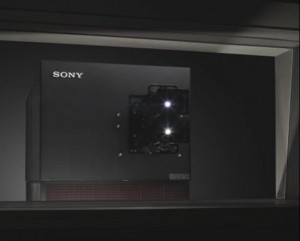 Meanwhile on the front-end, studios have an equally contentious struggle with the theater chains these days too. We’ve covered the in-fighting over 3D glasses, projector conversion, and the like, but the discussions tend to focus on the big chains that actually care about the blockbusters being released in 3D. The thing is, as legitimate auteurs like Werner Herzog and Martin Scorsese start to make 3D films (disregarding the infinite fanboy wisdom claiming they shouldn’t), it becomes clear that the art house theaters may be missing opportunities. Baz Luhrmann’s star-studded take on the classic novel The Great Gatsby is sure to be only the first of many dramas released in the format that are less dependent on spectacle. Some of these, like last year’s Cave of Forgotten Dreams (last year’s most successful independent documentary), are the art house scene’s bread and butter, yet might get snapped up by bigger chains with the screens to accommodate their extra dimension. But is the cost worth it for the little guys?
Variety has an interesting collection of quotes from various chains and directors that spoke on the topic, but it boils down to the fact that small struggling theaters can’t afford to drop ~150k on updated systems that will take a year to pay for themselves. Without being fully convinced of the financial upsides (which is still a benefit of arguable importance for many blockbusters) it’s just not going to happen anytime soon. How damaging that might be to them remains to be seen, but it’s yet another sign of serious stretch marks in a warping marketplace.
How long do you figure it will be before a new status quo establishes itself and we enter some new realm of normality? Really, will it ever happen, or have we gone over the edge of a precipice of change that won’t stop until we’re using technology and absorbing movies in ways we could never have predicted?
Twitter
Comment Below
Message Board
WB Delay News via THR



13 comments
That has to be the first time I’ve heard someone claim that “the writing is on the wall” for the “dwindling home video market.” As opposed to saying that about the dwindling theatrical release market, I mean. People will ALWAYS want movies in their homes, in some way or another, and don’t we always call that “home video” regardless of whether you download, stream, use a physical disk or plug it into your brain with a USB cable?
Art theatres like IFC Center in New York screen 3d films (they long-played Herzog’s… hell, it may still be playing there).
Also, if you think Baz Luhrman isn’t going to glitz the sh*t out of Gatsby, well… just look at his oevre.
I interpreted “home video” to refer to the classical rental model pioneered by betamax/VHS and continuing with DVD/BluRay. There’s a massive distinction to be made by the brick-and-mortar business model and the streaming models.
There are other market pressures potentially working against Netflix (and Amazon) to consider: bandwidth limits by providers. Cable providers have some interest in pushing their own streaming services, and can potentially make Amazon and Netflix less attractive if streaming one of their movies counts against a bandwidth limit.
The future is streaming and on-demand. But don’t put it beyond the troglodytes running the studios and record labels to shoot themselves in the foot before coming to terms with reality (ie, the market).
I don’t understand why Netflix hasn’t negotiated a deal with studios to have a rent/sell model like Gamefly does. How many more discs would be sold if after watching it you could buy it to keep for another $10-15 with the case and any extra discs shipped later. It wouldn’t really work for TV series, but I could see that bringing in tons of sales of new releases. It would get rid of the 28/56 day delay and rental versions of discs as well, both good things.
“Disregarding the infinite fanboy wisdom claiming they shouldn’t”
Haha…good shit..
All I have to say is 1984 is on streaming…then it’s taken down…then it’s back…then it’s taken down…then its back..when you own the DVD you never have to pay for it again….and you never have to worry about contracts between services, rights, switching services…..blahhh…blahhh…
I love physical media still. Yes it takes up space, but there is something to be admired about an actual DVD/blu-ray collection. CD’s, eh. I still prefer the physical, but those can stack up faster, and good headphones can still do music justice. Small screens do not do video justice. And ultimately, I love that this new 28/56 model helps my local video store stay in business. They outlasted my blockbusters and their business is booming. They do a credit system – 20 bucks for 11 one night rentals. DVD or Blu. Old or new. That deal is stellar. This just cements their continued success.
I am the type of person that should love netflix and for a while there, I did. The idea of home rental over the web and streaming for instant seemed like a interesting take that could serve anybody. It was the combination that drew me. Then netflix decided to follow the money over the quality of their service. By focusing on streaming, not only do they provide incentive for studios to release films in hard media with few special features for full purchase price, it also helps to contribute to a growing disposable culture as opposed to consumer.
Movies, to me, are something important and grandiose and I feel that streaming is lazy and largely trivializes it. It takes these massive, very important collaborative works and turns them into things into something that can be streamed in an afternoon and never watched or thought of again. By removing the presence of hard media it subconsciously strips them of their weight and value in the average customer (obviously no one here at CHUD, but the average joe). When removed of that value, do you really think the average customer would actively seek out interesting, often difficult films over what is easy disposable entertainment? Sure, You can stream lawrence of arabia, but given the fact that you’re streaming do you really think an average customer would have the patience and the consideration for that movie or would they rather just stream an action movie. Not only that, we are now raising a generation of children with this disposable, trivialized mindset. Who wants to go out to the theater except for special occasions, when they can just stream something good at home? we already have kids who can’t watch black and white, pre widescreen film and television, or even foreign films. And now giving them the chance to take film, its very existence for granted is not a step I want to take. My father owned one of the first sony dvd players ever and when I wanted a pc game based on a movie franchise (aliens vs predator) He actively sat me down and made me watch every alien and every predator movie, and then the thing and bladerunner, in a two day period. The weight was given because he bought the dvds to show me them and thus it was important. Even rentals were important because they existed, they were physical and you had to go out and get them. There was effort involved and thus watching them was a reward for that effort. How would I think of this if the media was readily available and seemingly invisible? It wouldn’t mean anything to me at all, its already there so thus I would take it for granted. Removing the effort, the presence and you remove the importance of it in a child’s mind. It promotes lazy and inconsiderate thinking. And most of them will carry that endemic cultural laziness with them for the rest of their lives. You strip the rite, the ritual of its presence, and you get hollow meandering. The medium is the message, and streaming is diluting that message because it is not a medium, it is a service.
Streaming is not the same as rental. It is not the same as dvd ownership. Yes, overtime quality will improve in streaming and the internet will get better. But streaming services? They’re not a medium. A medium, dvd, laserdisc, VHS, Bluray, are consumer products bought and owned by customer. Money in exchange for goods. Netflix is service, that feeds you film on a conveyer belt, giving you the illusion of access and freedom when in reality you don’t have anything. You pay money on a consistent basis, but you don’t own anything and you don’t have any real control. You are giving yourself willingly to a corporate entity that only cares about money. They’re not going to catalogue every movie, they’re going to fill their databases and servers with only what will make them the most money, with obviously a few exceptions. There isn’t even a standardized format or catalogue amongst the streaming services. I can’t even get access to criterion because most of their movies are on HULU+ and I’m canadian.
So I don’t own anything, I’m given a limited pool of films with no consistency amongst other pools, which have things I want but no access to, there is no effort involved and thus no value to younger generations, and it promotes studios to be lazy with their hard media release. It what way is streaming any good then. Sure, it’s fast but speed isn’t always a good thing. No heart, no soul, no thought in streaming. And thus no value. I want it die, and I want us to be limited to hard media, because streaming is only leading to the further degradation of popular and consumer culture.
A friend once asked a girl out to a film showing at TIFF lightbox, a film he knew she would like because she was into that sort of movie from that era. She was intelligent and knowledgable in film. The conversation went something like this:
– Oh, that movie. Yeah I watched it on Netflix a while ago.
– Did you like it?
– I don’t really remember it at all. I just watched it and never thought about it again.
– So do you still want to see it, then?
– No, not really. I already saw it, so who cares?
A movie, from the genre and era that she likes, and she didn’t want to see it simply because she saw it on Netflix already. She doesn’t even remember anything about the film, but she doesn’t want to see it based on some vestigial cataloguing in her mind that at some point, she already saw it and thus a repeat viewing was of no value to her. Streaming is not a good thing any attempt to stunt its growth, I approve of.
Netflix has a shitty stock price? Last time I checked it was trading at $90 a share.
I love Netflix and I love buying DVDs. I like it cause it gives me access to movies I would probably never have a chance to otherwise see and, to be perfectly honest, I simply couldn’t afford to own every movie that I would like to. So Netflix allows me to be able to see the movies I want to when I want to but don’t own because I can’t afford to.
And I also don’t think Netflix charges ENOUGH. I would gladly pay 20-25 dollars a month if it meant I had more access to more films.
I understand
wow. i wrote a very long and thoughtful response and that was all that posted.
I would still like to hear what you have to say
You are too kind. Their genomes are at least one monolith short of troglodyte.
Comments are shown as archived from the original site; new comments are closed.